



Outer Banks family reunion rentals: How to choose the right home and town
Planning an Outer Banks family reunion gets much easier when you make the big decisions in a clear order instead of jumping straight into listing photos. If you sort out your headcount, town, beach position, and bedroom plan first, the right house usually reveals itself pretty quickly. This guide walks you through the practical choices that matter for Outer Banks family reunion rentals, so your group can move from “maybe next summer” to an actual short list.

An Outer Banks family reunion works best when you treat the house like your home base for the full week, not just a place to sleep. The real decisions are usually group size, bedrooms, bathrooms, town, beach position, amenities, timing, cost, and how you will handle groceries, parking, and beach routines once everyone arrives. If you make those choices in order, comparing Outer Banks family reunion rentals feels a lot less overwhelming and a lot more like a real planning process.
Why is the Outer Banks a good place for a family reunion, and how does it compare with Myrtle Beach?
The Outer Banks is a strong family reunion destination because large beach homes let your group stay together, cook together, and still spread out when people need quiet time. Compared with Myrtle Beach, the Outer Banks usually fits better when your priority is one shared home base, long beach days, and lower-key evenings. If you are planning for six families or 25-plus people, OBX is very realistic when the goal is togetherness rather than a resort-strip vacation.
That difference shows up quickly once you picture the week. In the Outer Banks, your reunion rhythm is usually drive over the Wright Memorial Bridge, settle into the house, learn your beach path, stock the kitchen, and let the week unfold. A day might mean coffee on the deck, a beach setup near one dune crossing, lunch back at the house, and an evening run to Duck Boardwalk, Jockey’s Ridge, or a grocery stop off NC-12. In Myrtle Beach, the center of gravity is often the commercial strip, resort towers, golf packages, amusement-style attractions, and nightlife.
That does not make one better for every group. Myrtle Beach can be a smarter fit if your reunion really wants elevators in a high-rise, entertainment on foot every night, and a denser mix of attractions without much driving. But for a multi-generational Outer Banks family reunion, especially one with grandparents, young kids, and people who want flexible schedules, the Outer Banks usually wins because the week can revolve around one house and one stretch of sand.
You also have options within OBX itself. Corolla gives you a farther-north, house-centered feel. Duck adds strolling, shops, and soundside evenings. Kill Devil Hills and Nags Head put you closer to central errands and classic landmarks. Those details matter because the right reunion is not just about the house. It is about how the house, town, and road network work together once everyone is actually there.

What types of Outer Banks family reunion rentals are available?
Outer Banks family reunion rentals are usually large, full-week beach homes, and the best fit depends on how your group wants to live for seven nights. Your main choices are one shared event-friendly home, two nearby homes, oceanfront homes, soundfront homes, pet friendly homes, and amenity-heavy homes with pools, elevators, and game spaces. We specialize in 4-plus bedroom weekly homes in Corolla, Duck, Southern Shores, Kitty Hawk, Kill Devil Hills, and Nags Head, which gives you a lot of room to match the house to the reunion instead of forcing the reunion into the wrong house.
Here is the easiest way to self-select:
- One shared event home: Best when the group wants one kitchen, one main dining setup, one pool, and one beach path.
- Two nearby homes: Best when several family branches want privacy, nap-friendly quiet, or separate budgets.
- Oceanfront gathering home: Best when beach time is the center of the reunion and you want the house to function like beach headquarters.
- Soundfront retreat: Best when your group values sunsets, calmer water views, and a quieter evening pace.
- Pet friendly home: Best when the reunion is not really complete unless the dogs come too.
- Amenity-focused home: Best when the house itself is part of the entertainment plan, especially for mixed ages and one rainy afternoon.
When you search, use the tools in the same order you would make the real decision. Start with arrival date and duration, then price, then bedrooms, then amenities. After that, switch between list view and map view so you can see whether the homes are actually near one another, how close they sit to the beach, and whether the town location supports your plan for groceries, outings, and dinners out. Comparison features are especially useful once you are down to three to five homes and want to judge tradeoffs instead of scrolling endlessly.
How many bedrooms, bathrooms, and guests can large OBX homes handle?
Large Outer Banks reunion homes can handle a lot more people than first-time visitors often expect. In event-home collections, you will see homes ranging from 9 to 27 bedrooms, and many large homes are posted to sleep 20, 25, 30, or even 40-plus guests depending on the official occupancy. A 10-bedroom house for about 22 people is realistic on the Outer Banks, especially if you book early and stay flexible on whether you land in Corolla, Kill Devil Hills, or Nags Head.
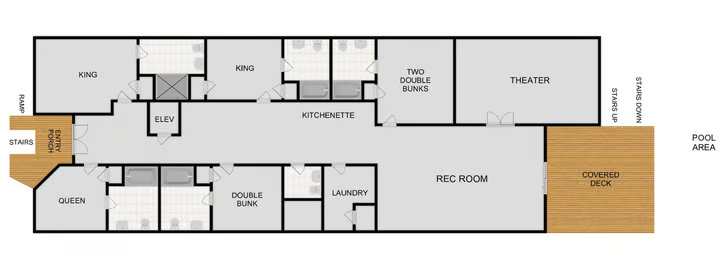
The key is to stop thinking only in terms of bedroom count. Bedrooms and bathrooms need to be reviewed together, because family branches use space differently. A reunion with 22 people might include six couples, four singles, three kids who can bunk together, a teen who wants privacy, and one grandparent who needs a room near the elevator. That same 10-bedroom number can feel spacious in one layout and awkward in another.
As you compare homes, open each Details page and check these planning checkpoints:
- Bedrooms and exact bed types
- Full and half bathrooms
- Bunk rooms versus private suites
- Sleeper options, if any
- Maximum occupancy
- Parking count
- Elevator availability
- Floor-by-floor gathering spaces
This is also where you answer the “Can we find a house that sleeps 25-plus people next summer?” question honestly. Yes, you can, but do not rely on bed count alone. Posted occupancy, dining space, parking, and circulation matter just as much as the sleeping chart. A reunion home that looks huge in photos can still feel tight if breakfast, showers, and beach departures all bottleneck at the same time.
Should we rent one big beach house or several nearby homes?
One large event home is usually best when your group wants shared meals, one central gathering area, and an easy beach routine. Several nearby homes work better when the reunion includes babies with early bedtimes, older relatives who need quieter sleep, or family branches that want different budgets and more privacy. For a 30-person group, both approaches can work well on the Outer Banks.
If you are trying to get 40 people under one roof, it is possible in some cases, but the checklist gets stricter. The official capacity has to line up. So do bathrooms, dining space, parking, and whatever rules apply to that specific home if you are planning organized meals, vendors, or a milestone-night gathering. That is why some groups are happier in two houses close together, even when one giant home technically exists.
A simple way to decide is to ask one question: do you want the reunion to feel like one household or one neighborhood? If you want one household, choose the big house. If you want one neighborhood, choose a hub home plus one or two supporting homes nearby. The hub home becomes the breakfast house, the beach-cart house, and the “everybody come over at 6:00” house.
Multiple nearby homes are especially helpful for blended families, grandparents who turn in early, toddlers on nap schedules, and groups splitting costs by branch. Use map view to check whether homes are truly walkable to one another, whether they share the same beach access style, and how much car shuttling would be involved. Two homes that look close on a listing page can feel much farther apart once you factor in NC-12, neighborhood layouts, and where people will actually park.
Which Outer Banks town or neighborhood fits our reunion best?
Corolla and Nags Head are two of the strongest choices for larger reunion homes, Duck is excellent for walkability, Southern Shores is quieter and more residential, and Kill Devil Hills or Kitty Hawk work well when your group wants central access. If you are deciding between Corolla, Duck, and Nags Head, the best answer depends less on status and more on how your family actually spends a week together. Quiet beach days, restaurant strolls, and easy errand runs lead to different towns.
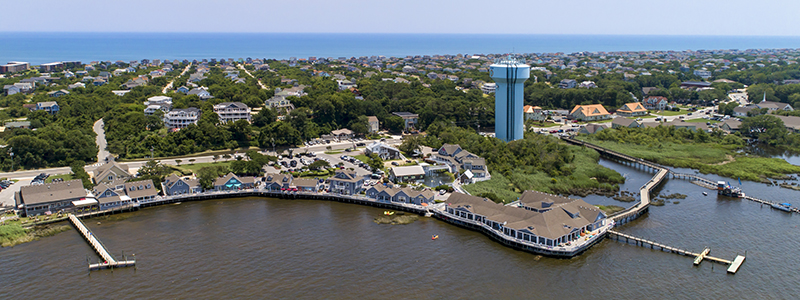
Corolla is a strong fit when you want larger homes, wider-feeling beach days, and a more removed north-end routine. You have grocery options, the Currituck Beach Lighthouse area, and plenty of room for groups that mostly plan to stay put once they arrive. The tradeoff is the longer drive north on NC-12, which matters if different cars are arriving at different times or you expect several outings during the week.
Duck works especially well for mixed-age groups who like to walk after dinner. You can spend the day at the house and still head into the village for the boardwalk, Town Park, coffee, ice cream, or a reservation without turning every outing into a car caravan. North Duck and neighborhoods near the village tend to be especially good for reunions that want a softer, stroll-heavy rhythm.
Nags Head gives you classic beach-town energy, piers, Jockey’s Ridge, restaurant variety, and easier access south toward Roanoke Island and Oregon Inlet. It is a very practical choice for large groups because errands are easier and the central stretch gives you more outing options when everyone does not want the same thing. Kill Devil Hills and Kitty Hawk share that convenience, especially for groups who want easy access to groceries, the Wright Brothers National Memorial area, and mid-week supplies.
If your main question is “What part of the Outer Banks is quietest for a private reunion?” start with Southern Shores, north Duck, South Nags Head, or some soundside Corolla areas. Those areas generally feel lower-key than the busier central corridors, while still keeping you connected to the rest of the beach. Northern Beaches and the central towns do not function the same way, so treat them as different reunion styles, not just different pins on a map.
Should we choose oceanfront, semi-oceanfront, oceanside, or soundfront?
Choose oceanfront when the beach is the main event, mobility matters, or you want everyone gathering on the same stretch of sand without much logistics. Semi-oceanfront and oceanside homes can save money while keeping you close to the beach, and soundfront homes are best when sunsets, calmer water views, and a quieter evening rhythm matter more than stepping straight onto the ocean beach. For many reunions, this single decision changes the whole feel of the week.
If you are planning for 16 people in Nags Head and need oceanfront so everyone can hang out together on the beach, start there and do not apologize for it. Filter for Nags Head, oceanfront, enough true bedrooms and bathrooms, and a strong common area. Then review the Details for dune crossings, private walkway setup, parking count, and whether grandparents or little kids can get from house to sand without a complicated stair routine. Homes in Nags Head with direct beach walkways and solid shared spaces are the cleanest answer for that kind of reunion.
A quick self-selection list helps:
- Oceanfront: best for beach-focused groups, easy sand access, and deck views for anyone who wants to watch without always walking down.
- Semi-oceanfront: often very close, but with a road or another row between you and the water.
- Oceanside: usually the value play if your group is fine with a few minutes on foot.
- Soundfront: ideal for sunset dinners, paddling, and a calmer end-of-day atmosphere.
Before you decide, study the photos and map placement. Look for beach access notes, dune-crossing distance, stairs, parking layout, and whether the house gives you space to stage chairs, umbrellas, coolers, and sandy kids on the way back in. Soundfront homes can be wonderful for reunion dinners and quieter evenings, but oceanfront homes make all-day beach logistics noticeably easier.
What amenities and features matter most for a multi-generational group?
The most important reunion amenities are the ones that reduce friction every day: a private pool, enough bathrooms, large kitchen space, multiple living areas, and features that keep different age groups comfortable at the same time. After that, elevators, game rooms, hot tubs, theater rooms, outdoor showers, and pet friendly options start to separate a good house from the right house. For a multi-generational week, convenience usually matters more than flashy extras.
A useful way to rank amenities is by who they help:
- Kids and teens: heated private pool, game room, theater room, bunk rooms, easy beach access
- Adults: big kitchen, large dining area, deck seating, grill, hot tub, extra refrigerator space
- Seniors: elevator, fewer stairs, shaded decks, easy seating areas, bedrooms away from late-night noise
- Dogs: pet friendly policy, outdoor rinse area, nearby walking routes
- Drivers: enough parking and, for some groups, an EV charger
This is where groups often over-filter too early. Do not begin with “must have theater, must have two hot tubs, must have cabana.” Start by ranking your top three real needs. Maybe those are elevator, oceanfront, and pool heat. Maybe they are pet friendly, 10 bedrooms, and a quieter town. Once those basics are set, add the nice-to-have features.
Some of our larger homes include heated private pools, multiple hot tubs, home theaters, game rooms, elevators, pet friendly options, EV chargers, cabana features, and outdoor showers. Those are worth paying attention to when they solve a real family issue, not just because they sound fun on the listing. The best reunion houses are the ones that make breakfast easier, beach departures faster, and bedtime less chaotic.
How do we find the right house for 16 people in Nags Head or 22 people needing 10 bedrooms?
Start with people, not properties. For 16 people in Nags Head, begin with oceanfront homes that have enough real bedrooms, a strong shared living area, and beach access that works for both grandparents and kids. For 22 people needing 10 bedrooms, that setup is realistic on the Outer Banks, especially if you book early and stay flexible on town or beach position.
Follow this step-by-step search process:
Confirm the real headcount.
Count adults, children, couples, singles, dogs, and anyone with mobility concerns. Your output should be a simple rooming worksheet, not just “about 22 people.”Pick the town and beach position.
Choose Nags Head oceanfront, Corolla oceanside, Duck soundfront, or whatever matches your actual week. Your output here is one primary target and one backup, such as “Nags Head oceanfront first, Kill Devil Hills oceanfront second.”Set the full-week date range.
Large homes are rented by the week, so choose the check-in week before you fall in love with a listing. Your output is one preferred week and one alternate week.Apply filters.
Use bedrooms, bathrooms, occupancy, price, pet friendly status, and your top amenities. For the 16-person Nags Head example, that might be 8-plus bedrooms, oceanfront, elevator preferred, and enough parking. For the 22-person example, start with 10 bedrooms and then confirm occupancy. Your output is a short list, ideally under 10 homes.Compare the Details pages.
Open photos, floor plans, bed layouts, maps, parking info, and beach access notes. This is where you catch the difference between “sleeps enough” and “actually works for our family.”Share three to five finalists.
Send the short list to the family decision-makers with price, rooming pros and cons, and your recommended first choice. That keeps the conversation focused and helps your group move toward a booking instead of restarting the search every few days.
If your question is “Where can I find a beach house that sleeps 25-plus people for next summer?” the practical answer is to search reunion or event-friendly homes by guest capacity and bedrooms, then verify the official occupancy on the Details page before you go any further. Favorites, comparison tools, and map view help a lot once you are choosing among a handful of serious contenders rather than browsing casually.
When should we book, and how much should we budget?
Book as early as your group can agree on dates, especially for June, July, and August weeks. Peak summer demand is highest for oceanfront homes, 10-plus bedroom homes, pet friendly homes, and large reunion houses in Corolla and Nags Head. If your group is aiming for next summer and needs 25-plus sleeping space, earlier is better.
Season matters as much as size. June through August gives you the warmest, easiest beach routine, but also the most competition. May, early June, September, and October often work beautifully for adult-heavy groups, retired relatives, and families with more schedule flexibility. Spring and late fall can be especially good for milestone dinners, sightseeing, golf, or fishing when the reunion is less about full beach days and more about having time together.
Budget conversations go more smoothly when you list the real cost drivers:
- Week of stay
- Home size
- Town
- Oceanfront versus soundfront
- Pool heat
- Pet fees
- Taxes and travel insurance
- Groceries and seafood nights
- Beach gear rentals
- Catered meals or private-chef dinners
- Activities and outing costs
Do not just compare the headline weekly rate. Compare the full weekly total, then divide it in a way your group can understand. Many reunion planners split by family branch, while others split by bedroom tier or suite quality. That approach is usually clearer than a simple per-person number, especially when one branch includes four people and another includes two. The most accurate numbers will always be on the current property calendar and pricing details for the exact week you want.
What logistics should we plan before everyone arrives?
The smoothest reunions plan bedrooms, groceries, meals, parking, dogs, beach gear, and arrival timing before travel day. If you leave those decisions until everyone is crossing the bridge, the first 24 hours can feel scattered. A simple plan written down in one shared family thread solves most of that.
Start with arrival day. Summer Saturdays and Sundays can be busy around the Wright Memorial Bridge, US-158, and NC-12, so do not send every car to the grocery store at once. Pick one supply team, assign one easy first-night dinner, and tell the rest of the family to unpack, claim rooms, and learn the beach path. For groceries by area, many groups use Harris Teeter in Corolla, Food Lion in Duck or Nags Head, and Publix in Kill Devil Hills, then fill in seafood dinners from local markets once the week gets going.
Next, handle the rooming and mobility plan before anyone arrives. Put seniors near the elevator or main living level. Place kids away from adults who go to bed early. Keep beach carts, shade gear, and outdoor showers in mind, because those details shape the daily routine more than people expect. If dogs are coming, use pet friendly filters, review the home’s policy, and check town rules for leash use and beach etiquette before the trip.
This is also the right time to think about milestone-night support. If you are hosting a 50th anniversary dinner or one big reunion meal, ask about local caterers, beach-equipment vendors, photographers, or private-chef help early. For organized beach ceremonies or large formal gatherings, check the town or park rules first. Duck has a wedding and special-event registration process, Nags Head requires advance registration for private events over 50 participants, and National Park Service beaches south of Nags Head can require permits for weddings and certain organized events.
What are the best family-friendly activities for kids, adults, and seniors?
The best reunion activity plan is simple: pick one or two outings everyone can do together, then leave the rest of the week open for smaller groups to split by age and energy level. That keeps the schedule from feeling like camp while still giving the reunion a few shared memories beyond the house. On the Outer Banks, that usually works better than trying to move 20 people as one unit every day.

For full-family outings, Jockey’s Ridge is hard to beat because toddlers can play at the base, teens can run the dunes, and grandparents can still enjoy the view without turning it into a long excursion. Jennette’s Pier, the North Carolina Aquarium on Roanoke Island, easy beach walks, mini golf, and soundside kayaking also work well because people can join at different effort levels. In Duck, the boardwalk and Town Park are great for a low-pressure evening outing.
For adults, think Oregon Inlet fishing charters, surf lessons, lighthouse stops, morning walks in Nags Head Woods, or a reservation with a sound view. For seniors, the Duck Boardwalk, Manteo waterfront, Wright Brothers National Memorial, Bodie Island Lighthouse grounds, and Currituck Beach Lighthouse grounds tend to work well because they are scenic without needing an all-day commitment. June through August is best for the full beach routine, while September and October often bring a gentler pace and still-pleasant water for groups that want warm-weather time with fewer people around.

For reunion meals, do not overcomplicate it. Plan three anchor dinners at the house, one catered or milestone meal, and one or two restaurant nights for smaller groups. Popular picks for group dinners include Basnight’s Lone Cedar for soundside seafood, Blue Moon Beach Grill in Nags Head, The Paper Canoe in Duck for a sunset dinner, and Kill Devil Grill for a central-night outing. That mix lets the week feel special without turning every evening into a logistics project.
What is the simplest way to make the final decision?
The simplest path is to decide in this order: guest count, bedrooms, bathrooms, town, beach position, amenities, dates, budget, and arrival logistics. A good reunion home is not always the biggest home. It is the one that fits your sleeping plan, gathering style, beach routine, and the expectations of the people actually coming.
Once you have that order straight, create a short list of three to five homes and compare the Details pages side by side. Look at bed layouts, parking, beach access, common areas, and whether the house supports the way your family wants to spend the week. That is how you move from “We need something for 25-plus people next summer” to “These are our top three, and here is why.”
If you are still torn between towns or between one big house and several nearby homes, that usually means one of your early decisions is still fuzzy. Go back to the real sticking point, whether that is budget, beach position, dogs, or mobility needs, and let that answer guide the choice. Our filters, our local knowledge, and our team can help you narrow the options, but the clearest reunion plans usually start with a realistic family worksheet and end with a small, workable short list for your Outer Banks family reunion rental.